
 SINCE 1993 MADE IN USA | ISO 9001:2015 | 303.684.0931 | CONTACT US SINCE 1993 MADE IN USA | ISO 9001:2015 | 303.684.0931 | CONTACT US
AIM Processing makes small electronic components that meet electronics manufacturer’s requirements including mechanical strength, conductivity, and low susceptibility to electrostatic discharge (ESD). We are experts in insert molding and overmolding as well as metal replacement. Our expertise in these services can save electronics manufacturers weight and cost of their parts as well as ensuring high-performance components.
Materials expertise for electronics applications
Our engineers have the materials expertise to provide guidance on the appropriate plastic composite for your component. Whether you need high conductivity or low conductivity (a highly insulating component) or need to meet a flammability requirement, our engineers can help recommend an appropriate material. We can offer static-free materials that prevent ESD damage to sensitive electronic circuitry. When a material requirement is critical, you can rely on our engineers to help you find the right material.
Optimizing the manufacturing process
Our engineers, experienced in design for manufacturability, will work with you to develop process steps that address all your requirements and cost-effectively create your parts. The engineering team is available throughout the life of the part in case requirements for the part change
Molding expertise for component protection
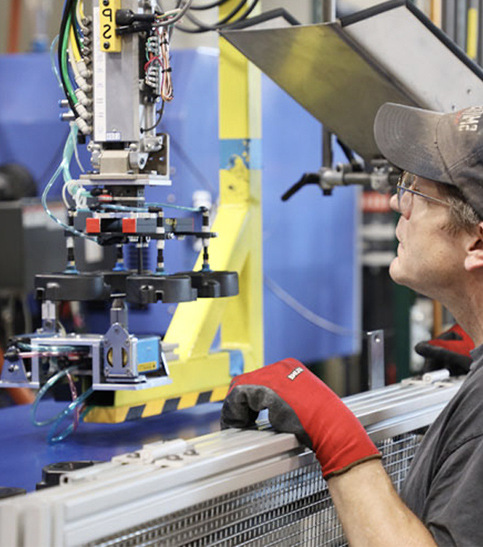
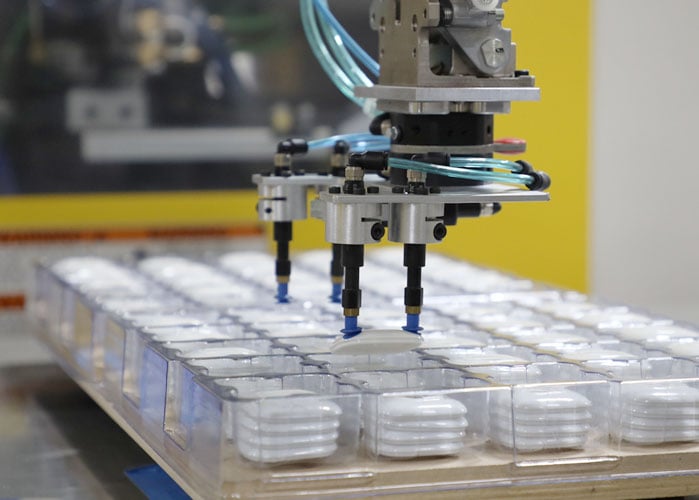
Two of our specialties are insert molding and overmolding. This can ensure your component cannot short to any conducting surfaces. We have insert molded and overmolded filters, electronic circuits, and connectors. These services can reduce the size and weight of assemblies.
Eliminating metal parts
Another area of expertise is metal replacement. In the past decade, new plastics have been developed that can meet the mechanical requirements of many metal parts. This allows plastic parts to replace metal parts. With plastic parts such as small enclosures, standoffs and brackets, you can compress your circuitry to meet small size requirements without compromising product reliability.
Protecting your product from the environment
We have extensive experience with manufacturing parts such as small enclosures that can seal your product from dust and moisture. We can help you achieve an IP67 rating for your product if it must operate outdoors.
Additional operations for component identification
Our secondary services can help with your inventory management and avoidance of incorrect part placement. We can perform such functions as providing laser etching and part marking for easy identification of injection molded parts. In addition, we can provide a shielding treatment on an enclosure to minimize the risk of external electromagnetic interference impacting your electronic device’s performance. If we are making a multi-part subassembly for you, we can put the assembly together to reduce your component count and reduce your manufacturing costs.
High volume and low volume adaptability
We can accommodate your volume requirements. If you require high volume, we operate 37 presses on a seven-day a week schedule. If you have an extensive product line consisting of many low volume products, we can cost-effectively run small volumes of 1000 parts up to millions.
Full-service manufacturing
AIM Processing has the capacity, engineering expertise, and the experience to manufacture your plastic parts for electronic products.
We can solve your challenges with our innovative and cost-effective solutions for electronic components.
Contact us today to discuss your requirements.
Injection molding in electronics is used to manufacture precise and durable plastic components such as housings, connectors and insulating parts. This process allows for the mass production of lightweight, high-strength enclosures that protect electronic circuits from dust, moisture, and impact. Injection molding is also used to create custom casings for devices like smartphones, laptops and remote controls, ensuring consistent quality and cost-effective production. Additionally, injection molding is essential for overmolding, which enhances the durability of cables and connectors by encasing them in protective plastic layers.
Injection molding benefits electronics manufacturing by enabling the mass production of precise, durable and cost-effective plastic components. It allows for creating lightweight yet strong enclosures, connectors and insulating parts that protect electronic circuits from environmental factors like dust, moisture, and impact. The process ensures consistent quality, reduces material waste and supports complex designs with high repeatability. Additionally, injection molding facilitates overmolding, which enhances the durability of cables and connectors by encasing them in protective plastic layers, improving product longevity and reliability.
Injection molding in electronics uses various materials, including thermoplastics, thermosets, and elastomers, depending on the application. Common materials include ABS (Acrylonitrile Butadiene Styrene) for durable housings, Polycarbonate (PC) for impact-resistant enclosures and Polypropylene (PP) for lightweight, flexible components. Nylon (PA) is often used for connectors due to its strength and heat resistance, while LCP (Liquid Crystal Polymer) is preferred for high-precision microelectronic parts. Additionally, silicone and TPU (Thermoplastic Polyurethane) are used for overmolding to provide insulation and protection for cables and connectors.
Injection molding offers several advantages for electronic components, including high precision, cost efficiency and scalability. It enables the production of complex and lightweight plastic parts with consistent quality and tight tolerances, ensuring reliable performance. The process minimizes material waste, reduces manufacturing costs and allows for high-throughput mass production. Additionally, injection molding supports overmolding, which enhances the durability of electronic components by providing protective insulation and impact resistance. This makes it ideal for producing enclosures, connectors and other critical parts in electronics manufacturing.
Injection molding improves the production of electronic devices by enabling the fast, cost-effective and high-precision manufacturing of plastic components. It allows for the mass production of durable and lightweight enclosures, connectors, and insulating parts of consistent quality. The process minimizes material waste, reduces assembly time and supports complex designs with tight tolerances. Additionally, injection molding enhances product reliability through overmolding, which provides extra protection for sensitive electronic components against moisture, impact, and environmental damage.
“We received the charger base and I want you all to know it looks FANTASTIC! Thank you for getting us this one for the BOD meeting.”
Joe P., President,
medical device company
“…thanks for all of your hard work as well as others at your facility in making this happen.”
Ron H., Quality Control Manager,
industrial product company