Frequently Asked Questions:
What is the difference between overmolding and insert molding?
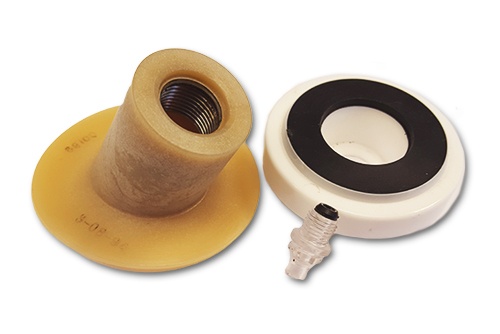
Overmolding and insert molding are two plastic injection molding techniques that combine different materials into one part. In the overmolding process, a two-step process, a plastic base material, typically a hard plastic, is molded and a second plastic material, normally a soft plastic, is molded over the base material. Overmolding improves the aesthetics, ergonomics, or protection of a part such as an anti-slip surface on a plastic button. The insert molding process places a pre-formed component, an insert, into a mold cavity in which plastic material is injected around the insert to bond the two materials together. The insert is typically a metal part such as a threaded piece. The insert molded part combines metal strength with plastic insulating qualities.
How does the insert molding process work?
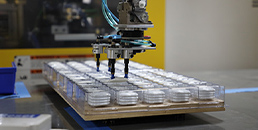
The insert molding process starts with placing an insert into a mold cavity. The insert can be manually placed into the mold cavity or with automated machinery. Next, molten plastic is injected into the mold. The mold is allowed to cool to allow the plastic to solidify around the insert. Once cooling is complete, the part is removed from the mold. If needed, post-processing steps such as trimming excess material and deburring of sharp edges are performed.
What types of parts are ideal for overmolding?
Overmolding enhances the functionality, durability and aesthetics of products such as medical devices, automotive components, electronic components and consumer products. Many components that are exposed to harsh environments can take advantage of overmolding. By overmolding a rigid plastic with an elastomeric material, the part can seal out water and dust. In physically demanding applications such as consumer power or hand tools, the elastomeric overmold can absorb impact or provide a functional grip.
What materials can be used for overmolding and insert molding?
There are many options for overmolding and insert molding materials. Selection depends on the application, required properties and compatibility between the primary material, the substrate or insert and the secondary material, the overmolding or insert molding material. The substrate is the rigid structural base. Substrate materials can be thermoplastics such as ABS, polycarbonate and nylon or metals such as aluminum, steel, brass, and alloys. Overmold materials, typically soft and flexible, can include thermoplastic elastomers and other rigid plastics.
Insert materials, pre-formed components providing functionality and strength, including metals, aluminum, steel, brass and copper, ceramics, and thermoplastics. Surrounding materials include thermoplastics, thermosets like epoxies and specialty plastics.
Which is better for manufacturing: overmolding or insert molding?
Choosing overmolding or insert molding for a part depends upon the requirements for both the application and the needed materials. For example, overmolding is advantageous for parts that require a soft-touch finish or ergonomic grips. Overmolding enhances the functionality, aesthetics or comfort of a part. Insert molding is more suitable for manufacturing parts that use plastic to surround functional components such as threaded metal nuts, standoffs and electrical connectors used in the automotive, aerospace and electronics industries.
Which molding technique offers better part integration: overmolding or insert molding?
Whether overmolding or insert molding is the optimum choice for part integration depends on the application of the part. Overmolding is the superior manufacturing operation when a soft plastic material must be bonded to a rigid part such as a toothbrush or tool handle. Overmolding is also preferred when the requirement is an enhanced tactile or aesthetic surface on a part. Insert molding is preferable when the structural integrity of a part or electrical insulation is the primary requirement. Insertion of a threaded metal bolt or bushing into a plastic enclosure or molding a hard plastic around an electrical connector are examples of operations in which insertion molding is the most suitable manufacturing process.
How does insert molding affect design flexibility?
Insert molding offers significant flexibility for part development. It allows the integration of two materials into a single part by embedding a component, such as a threaded part or an electronic part, into a plastic exterior. Insert molding increases the strength and durability of a plastic part without a substantial increase in part size. The process eliminates the need for secondary operations such as gluing or staking. Insert molding allows the design of more complex shapes to create parts for use in a wide range of applications. To realize the design flexibility that insert molding offers, designers need to ensure the insert material is compatible with the surrounding plastic to obtain adequate adhesion. In addition, the tooling design must incorporate the geometry of the insert and the part design may need features such as ribs or bosses to anchor the insert securely into the plastic mold.

 SINCE 1993 MADE IN USA | ISO 9001:2015 | 303.684.0931 | CONTACT US